


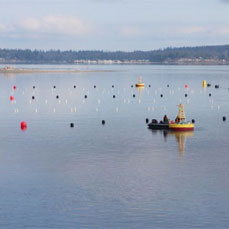
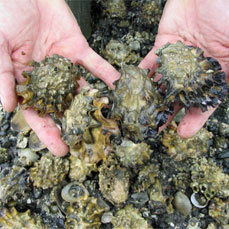
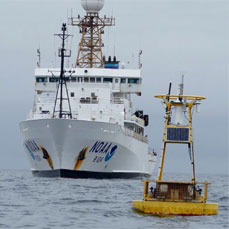
Leading the fight against ocean acidification
In 2012, Washington led the world by developing the first comprehensive strategy for action to address ocean acidification. This strategy, outlined in the report Ocean Acidification: From Knowledge to Action, created a global awareness of this critical threat to marine resources.
Five years later, the Marine Resources Advisory Council (MRAC) convened Washington’s leading ocean acidification thinkers to evaluate progress, next steps, and potential revisions to the recommended actions identified in 2012. The 2017 Addendum updates the comprehensive strategy based on emerging science, management practices, and the new global network of partners working on this challenge.
A news release with statements from stakeholders can be found here.
2024 Updates
The Marine Resources Advisory Council discussed progress and timely priorities to continue to address progress on ocean acidification. Read the one-pagers summarizing this process below.
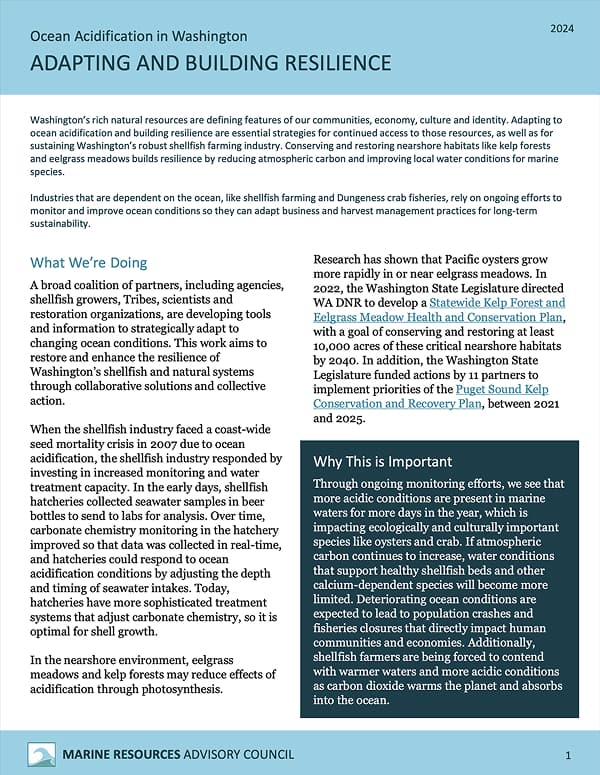
Adapting and Building Resilience
June 2024
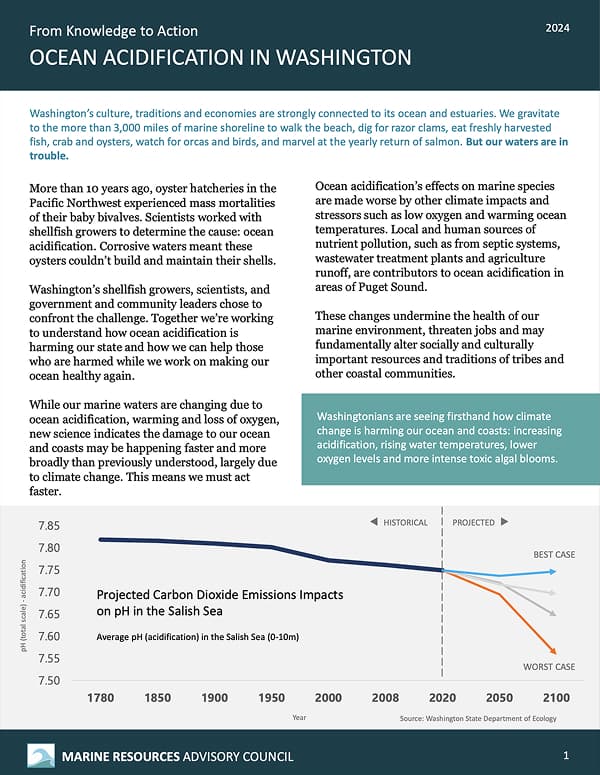
From Knowledge to Action
June 2024
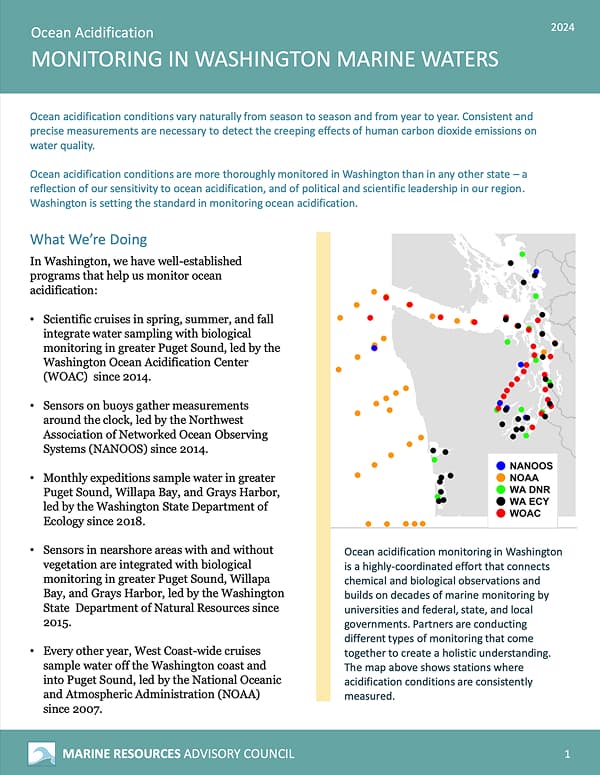
Monitoring in Washington Marine Waters
June 2024
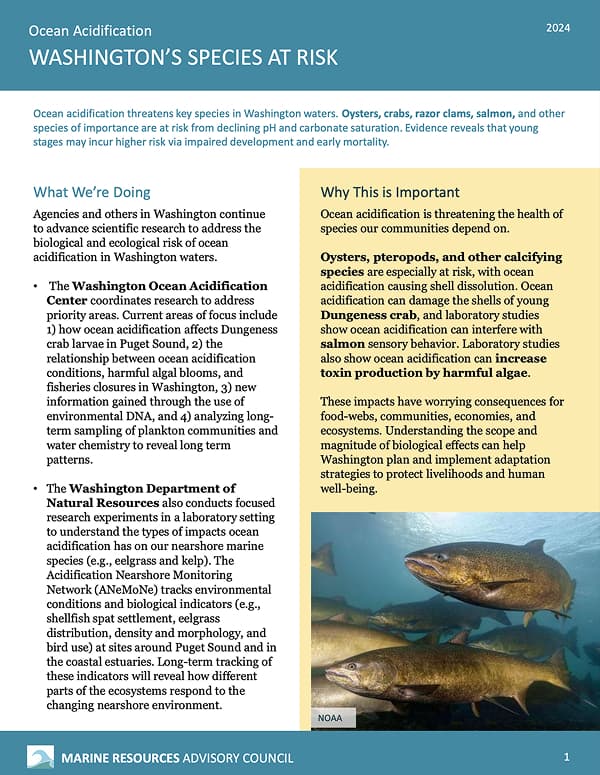
Washington’s Species at Risk
June 2024
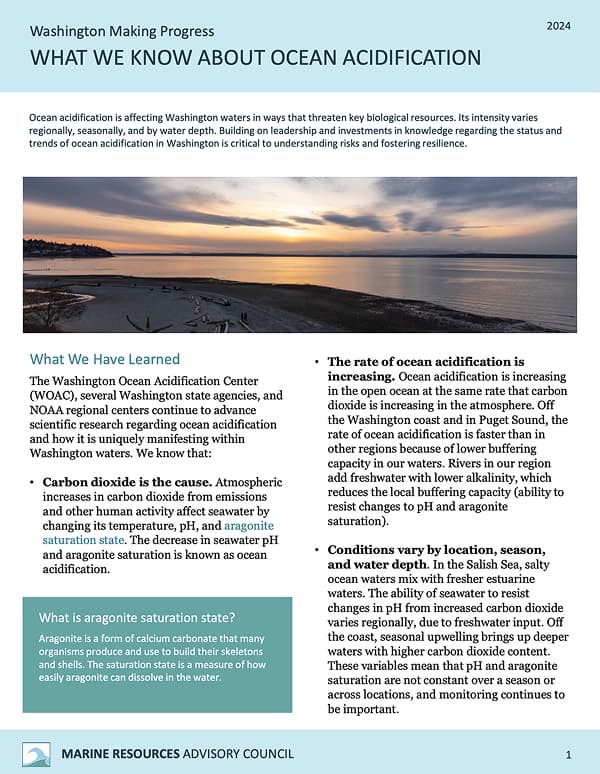
What We Know About Ocean Acidification
June 2024
Report by Chapter
About the Marine Resources Advisory Council
In 2013, the Washington State Legislature established the Marine Resources Advisory Council (MRAC) to act as a state body to maintain a sustainable and coordinated focus on ocean acidification. MRAC’s membership includes legislative, executive, and elected officials, nongovernmental organizations, and private sector.
Representatives from academic institutions and federal agencies have also been invited by the Governor to participate.
Since its inception, the MRAC has reviewed, evaluated, and prioritized the original 42 actions from the Panel’s recommendations. MRAC has worked across organizational boundaries to ensure ocean acidification work is efficient, leveraged, and focused so that it becomes integrated into key programs across the state.
For more information, members, and meeting materials, visit the MRAC webpage.